Rebuilding Education for National Transformation: A Somali Learning Agenda
Education is the architecture of the future
Education determines whether population growth becomes productive human capital. It also influences public trust, gender equality, health literacy, employment, social mobility, and peace. Reform should therefore be treated as a long-term national institution-building project rather than a collection of short-term school activities.
Start with foundational learning
Every learner needs literacy, numeracy, problem-solving, communication, and digital competence. Systems should measure whether students are learning, not only whether they are enrolled. Early-grade assessment, mother-tongue support, structured teaching materials, remedial learning, and consistent instructional time are practical foundations.
Make teaching a supported profession
Teachers require transparent recruitment, minimum qualifications, pre-service preparation, mentoring, continuing professional development, timely remuneration, and career pathways. School leaders need training in instructional leadership, safeguarding, data use, and community engagement. Reform will fail when expectations rise but professional support remains weak.
Build equity into finance and delivery
Public policy should prioritise girls, displaced learners, rural and nomadic communities, learners with disabilities, and households facing poverty. Financing formulas can direct additional resources toward disadvantage. Flexible calendars, mobile learning, school feeding, safe transport, and alternative learning pathways can reduce exclusion.
Use technology strategically
Digital platforms can widen access to teacher training, learning materials, assessment, and academic collaboration. Technology should complement—not replace—teachers and institutions. Investments must address electricity, connectivity, device access, content quality, data protection, maintenance, and digital literacy.
Strengthen higher education and Somalia studies
Universities should develop credible quality assurance, research ethics, academic publishing, labour-market alignment, and postgraduate training. Somalia studies should bring together history, language, literature, law, anthropology, political economy, demography, health, environment, peace, and diaspora scholarship. A strong national knowledge base enables Somalia to interpret its own development experience and formulate context-specific policy.
Conclusion
Educational development is the strongest long-term investment Somalia can make. A coherent learning agenda can connect foundational skills, professional teaching, inclusion, technology, higher education, and national scholarship into a system capable of supporting peace and prosperity.
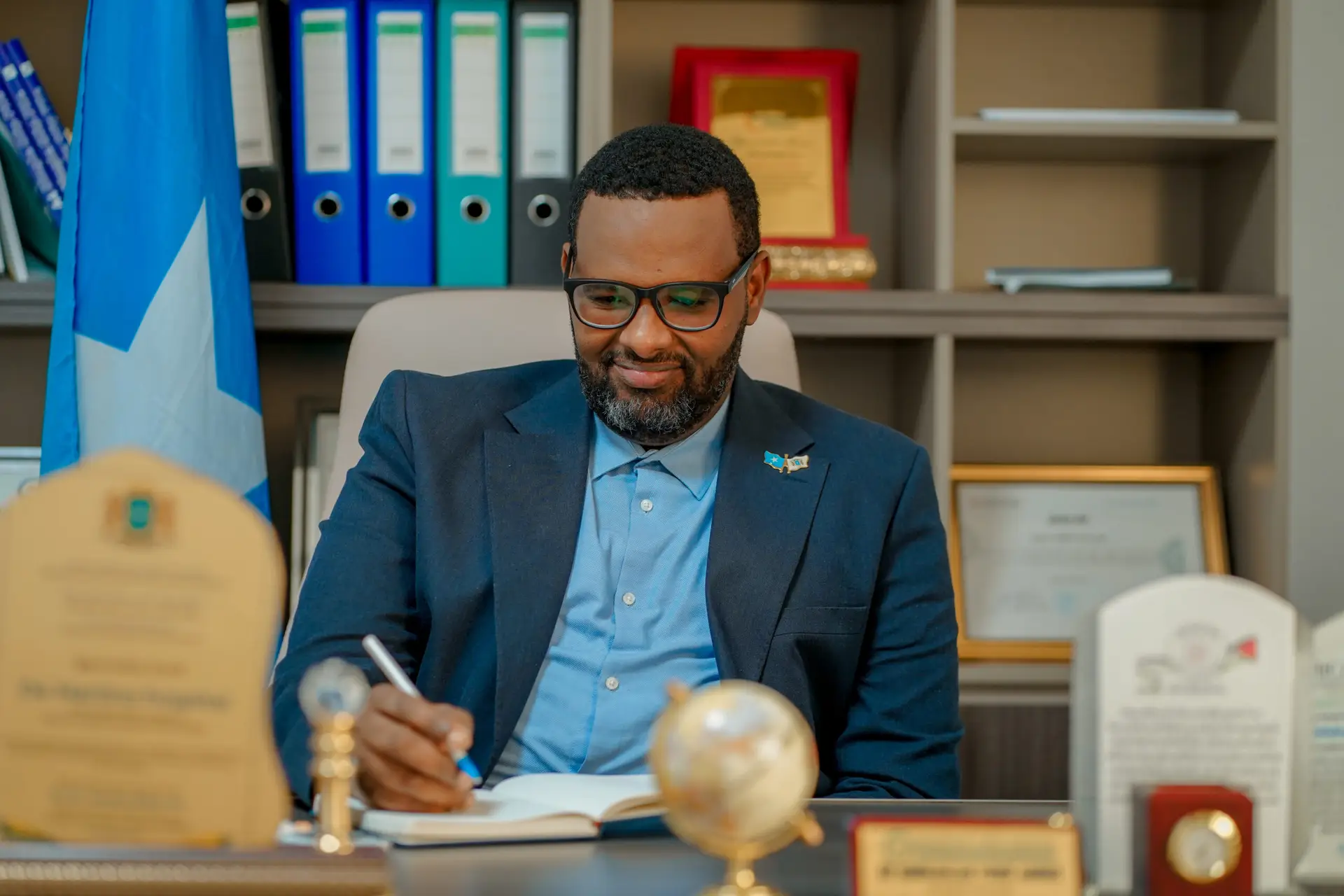
Dr Abdulrazaq Yusuf Ahmed
Health systems expert, public health specialist, academic researcher, and institutional leader working across health policy, demography, governance, education, and development in fragile settings.
Published by RIYAADA Institute for Leadership & Governance ·
ISNI 0000 0005 3005 9908 · Ringgold ID 847744
Journal ISSN 3136-1943 applies to RIYAADA’s serial scholarly publication,
not to this web blog post.
Share this Article
Help others discover this article by sharing it with your professional network.